Europe Day visits to schools in Kinlough and Granard
Ciaran marked Europe Day with visits to Kinlough National School in Co. Leitrim and Sacred Heart Primary School in Granard, Co. Longford.
Ciaran marked Europe Day with school visits at either end of his constituency, calling to Kinlough National School in County Leitrim and to Sacred Heart Primary School in Granard, County Longford. Europe Day is observed on 9 May each year and schools across the Union mark it with lessons, projects and visits from elected representatives.
The date commemorates the Schuman Declaration of 9 May 1950, in which the French foreign minister Robert Schuman proposed pooling French and German coal and steel production under a common authority. The reasoning was explicit and it was about peace: the industries that make weapons would be placed under shared control so that war between the two countries became, in Schuman’s phrase, not merely unthinkable but materially impossible. That proposal produced the European Coal and Steel Community, which six countries joined, and from it everything that followed — the European Economic Community, the single market and the European Union of twenty-seven member states — eventually grew.
Explaining Europe to eleven-year-olds
The challenge of a visit like this is that the European Union is an unusually abstract thing to describe. It has no single leader, it does most of its work through procedures with unfamiliar names, and its decisions arrive in Irish life already converted into national law. What is concrete is the evidence around a school in Kinlough or Granard: the blue flag on a sign at a road or water scheme, the food standards behind what is in the lunchbox, the right to live and work in twenty-six other countries, and the farm payments that support households in both parishes.
Ireland joined what was then the European Economic Community in 1973, and the change to rural Ireland in the half-century since has been substantial — in farm incomes, in infrastructure, in the position of women in the workforce, and in the fact that a child in a national school in Leitrim can take for granted a right to study or work anywhere from Portugal to Finland. For children whose grandparents emigrated without that right, it is worth pointing out.
Ciaran represents Midlands–North-West, the largest of Ireland’s three European constituencies by area, covering fifteen counties from Donegal and Leitrim in the north-west to Kildare and Louth in the east. Kinlough sits in north Leitrim near the Donegal border; Granard is in north Longford, a short drive from his own home place of Lanesborough. Between the two is a good deal of the ground he spent twenty-six years covering as RTÉ’s Midlands Correspondent.
Visits of this kind produce nothing measurable and no vote. Their purpose is longer-term: that some of the children in those classrooms grow up with a working idea of what the European Union is, where its money goes and how a person from their own county comes to have a say in it. Ciaran also hosts constituency groups at the Parliament itself, from community organisations to school and transition year groups, where the same explanation is given in the building where the work is done.
The EU is a party to the UN Convention on the Rights of Persons with Disabilities. Its Accessibility Act sets rules for products and services, and EU funds can support the move from institutional to community-based care.
Parliament’s Disability Intergroup brings MEPs from all groups together on these issues. Ciaran sits on its bureau for Renew Europe.
Related.
Ciaran: men find it hardest to talk openly about loneliness
Ahead of a European Parliament event on social isolation, loneliness, anxiety and addiction, Ciaran said men, and older men in particular, struggle most to speak openly about loneliness, and that public figures should speak up.
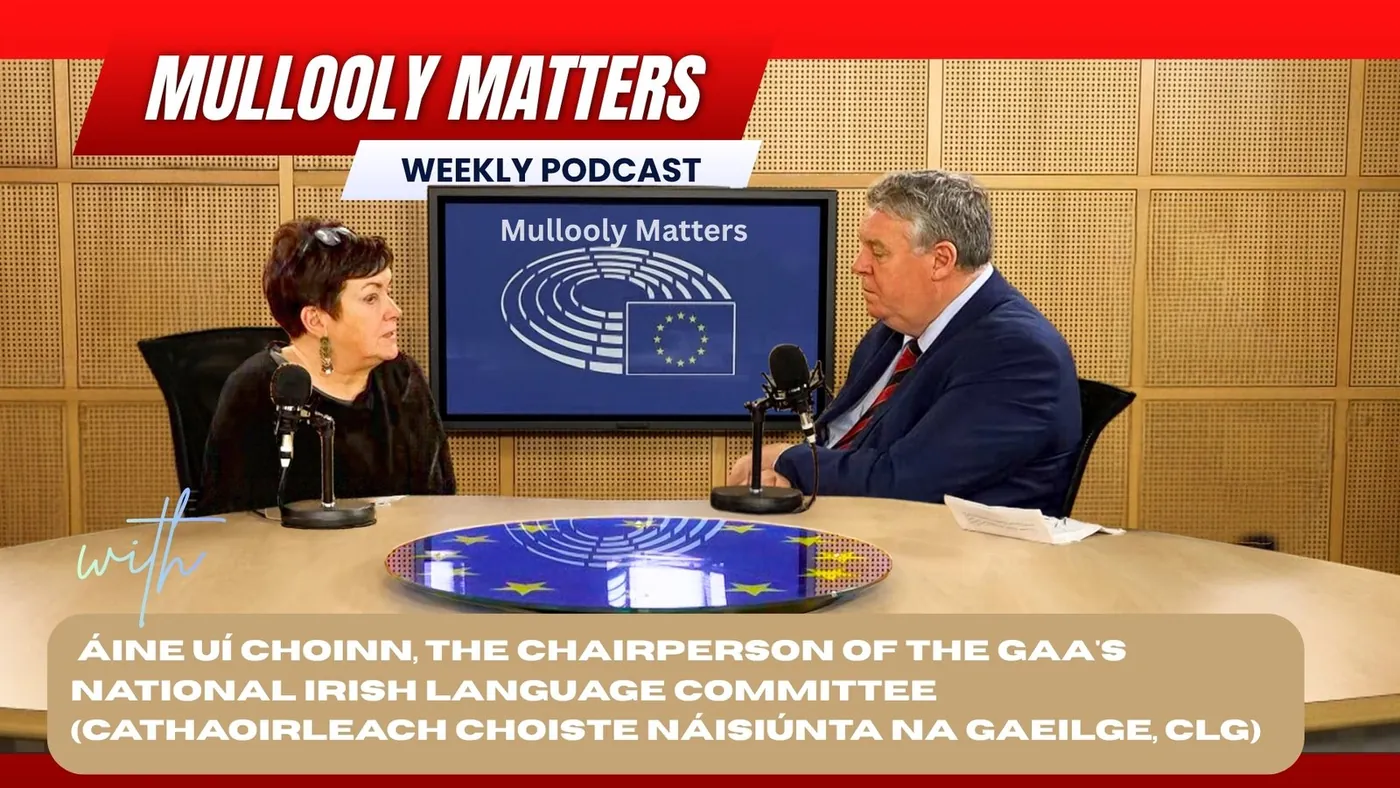 Mullooly Matters
: The Right to Stay – Can Rural Women Build a Future at Home?
Recorded in Brussels during Gender Equality Week, Ciaran talks to Áine Uí Choinn, chairperson of the GAA’s National Irish Language Committee, about what it would take for women and young people to build a life in rural Ireland and stay.
“Every woman deserves a pathway to safety and freedom”
After the latest update from Women’s Aid’s Femicide Watch, Ciaran called for urgent action to protect women experiencing domestic violence.