EU Fisheries Council outcome a “body blow” to Irish fishing
After December’s Fisheries Council in Brussels cut Ireland’s fishing opportunities for 2026, Ciaran warned of the damage to coastal communities and called for emergency aid, citing overfishing by non-EU states and continued access for other EU fleets in Irish waters.
The December Fisheries Council is the fixed point of the year in the fishing calendar. Ministers from the coastal member states meet in Brussels, usually into the small hours, to set the total allowable catches and national quotas for the year ahead on the basis of scientific advice and, since Brexit, in parallel with negotiations with the United Kingdom, Norway and the coastal states of the north-east Atlantic. When the 2025 Council concluded on 13 December, Ireland emerged with 57,000 tonnes less fishing opportunity for 2026.
Ciaran Mullooly called the outcome a body blow to the Irish fishing industry, warning that it would devastate coastal communities and put thousands of jobs at risk, and he called for emergency aid for the communities affected. His criticism was directed as much at the context as at the numbers: he pointed to continued overfishing by non-EU states in adjacent waters and to the continued access enjoyed by other EU fleets in Irish waters, arguing that the Irish fleet is carrying reductions that others are not.
“A body blow to the Irish fishing industry.”
That combination — a quota cut at home while stocks are fished hard elsewhere — has been the core Irish complaint about the Common Fisheries Policy since long before this . Ireland’s share of the quota in its own exclusive economic zone was fixed by the keys agreed in 1983, and the Brexit Trade and Cooperation Agreement then transferred a further share of EU quota to the United Kingdom, a transfer which fell disproportionately on Ireland. Mackerel and blue whiting, the mainstays of the Killybegs pelagic fleet, have in recent years been fished by Norway, the Faroe Islands, Iceland, Greenland and the UK to a combined total well above the scientific advice, because the coastal states have been unable to agree how to share them.
Ciaran has pursued each strand of that. In November 2025 he called for the — the 1976 political commitment that allows Ireland and the north of Scotland special consideration when quotas fall to low levels — to be invoked to protect coastal communities. In June 2026 he demanded answers on the EU–Iceland fisheries talks, insisting that Irish waters are not Brussels’ bargaining chip. In February 2026, in the Fisheries Committee, he sought to have Killybegs designated a control port and asked for help with the cost of monitoring obligations.
Emergency aid
The request for emergency aid reflects what a quota cut of that size means in practice for a port like Killybegs: boats tied up, crews without work, and processing and servicing businesses ashore with nothing to handle. The European Maritime, Fisheries and Aquaculture Fund allows for support in defined circumstances, including temporary cessation, and Brexit adjustment money was used for decommissioning and support after 2021. Ciaran’s argument has been that a reduction on this scale, imposed by a Council decision, creates an obligation on the Union that funds it to respond.
Read moreGalway Bay FM
Sources: ICES advice as reported by Donegal Live, 13 November 2025.
Under the Common Fisheries Policy, EU ministers set annual catch limits (total allowable catches) for each stock, based on scientific advice from ICES, and share them between member states using fixed keys based largely on historic catches from the 1970s.
The Hague Preferences, agreed in 1976, allow regions heavily dependent on fishing, including Ireland, to receive a larger share when quotas for key stocks are cut sharply. Ciaran has called for them to be invoked to protect Killybegs, Castletownbere and coastal communities.
Related.
 Wikimedia Commons
Future investment and reform essential in the fishing sector
Ciaran said Irish fishermen and coastal communities need greater investment, not further cuts, and that the fisheries budget must at the very minimum be fully restored. He said he has corrected his vote on a Left group amendment on the 2027 budget to reflect that position.
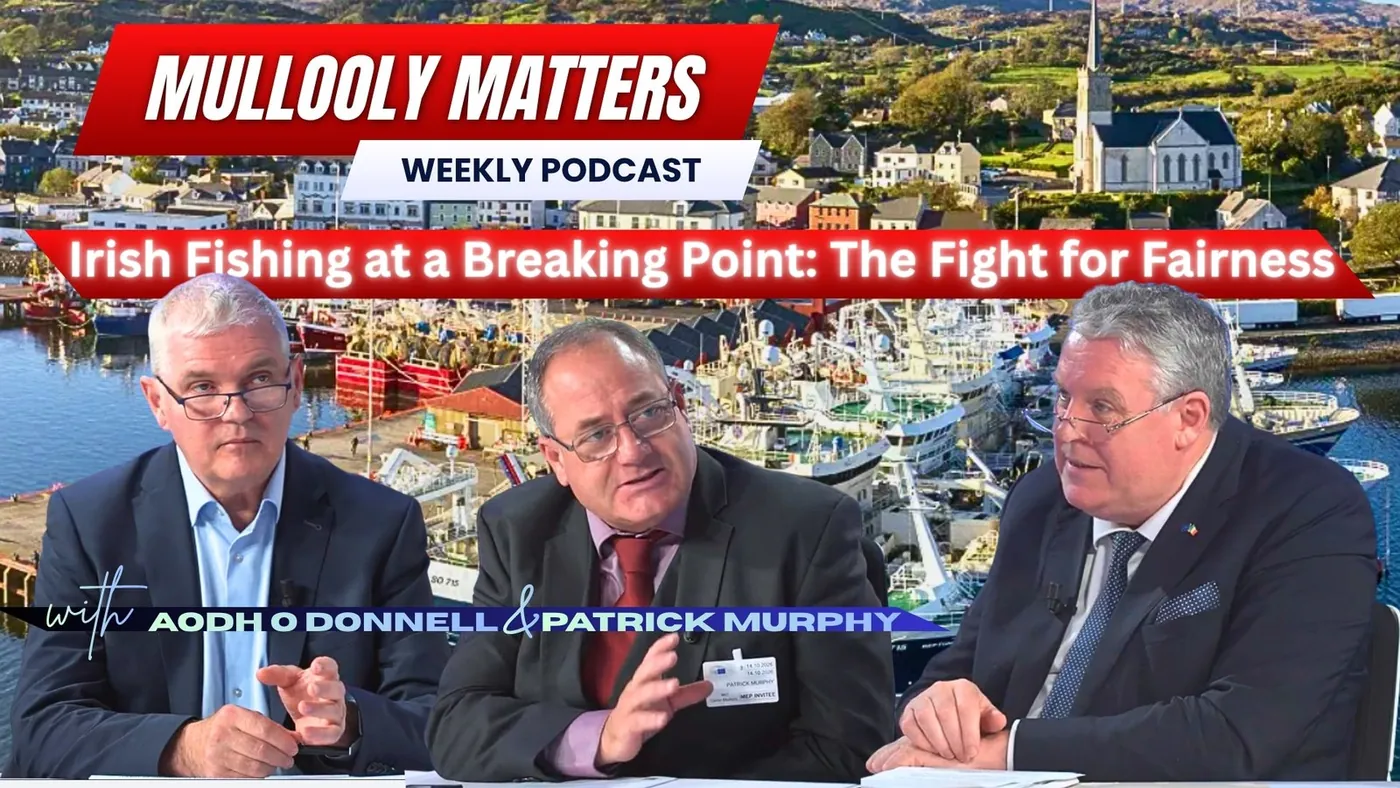 Mullooly Matters
: Irish Fishing at a Breaking Point, The Fight for Fairness
The new episode of Ciaran’s weekly podcast, with Aodh Ó Donnell of the Irish Fish Producers’ Organisation and Patrick Murphy of the Irish South and West Fish Producers’ Organisation, on the state of the Irish fishing industry.
Supporting the King of the Lake International Pike Festival on Lough Ree
Ciaran was thanked by the Lough Ree Angling Hub, alongside Roscommon and Longford county councils, for supporting its biggest ever international pike festival.