Joining the Renew Europe group
Ciaran confirmed he would sit with Renew Europe in the European Parliament and join the European Democratic Party.
Ciaran confirmed that he would sit with Renew Europe in the European Parliament and join the European Democratic Party, settling the question that had followed him since his election three weeks earlier. The arrangement was endorsed by the French MEP Sandro Gozi, a senior figure in the EDP, and places Ciaran in the same parliamentary group as Fianna Fáil’s four members.
“We have spoken to two or three parties in the centre since I was elected. We’ve been most impressed with the EDP commitment to some of the issues that I fought the election on.”
He set out what he expected the arrangement to deliver in concrete terms rather than in terms of political labels: “I will be the voice of the EDP in terms of agricultural farming, and we’d also be expecting a substitute role on another committee to be confirmed, probably regional development or employment.” Both of those expectations were borne out — he took a seat on the Agriculture and Rural Development Committee and on the Regional Development Committee.
Why the group matters
The European Parliament organises itself by political group rather than by nationality. Groups are formed from parties across member states that share a broad political outlook, and almost everything of practical value is distributed through them: speaking time in the chamber, seats on committees, the rapporteurships that put a member in charge of a piece of legislation, staff and research support. A member who sits outside any group — the non-attached members — has very little of this, which is why the weeks after an election are spent in negotiation.
Renew Europe is the liberal and centrist group, positioned between the European People’s Party on the centre-right and the Socialists and Democrats on the centre-left. Its members include parties from France, the Netherlands, the Nordic and Baltic states, Spain and elsewhere, together with the EDP. Because no single group holds a majority in the Parliament, legislation is passed by assembling coalitions, and a group in the centre is frequently part of those coalitions — which gives its members more influence on outcomes than their numbers alone would suggest.
There had been some initial concern within Fianna Fáil about Independent Ireland’s positioning, given the party’s campaign platform, but those objections were withdrawn. On the forthcoming vote on Ursula von der Leyen’s re-election as Commission President, Ciaran said he would keep an open mind, and made clear that the situation of people in Gaza would weigh heavily on his decision. He went on to vote against her, citing the absence of any concrete measure on Gaza or on the EU–Israel agreement.
For the counties of Midlands–North-West, the significance of the choice lay in the committees. Agriculture and Regional Development are the two committees that deal most directly with farm incomes, rural development, cohesion funding and the , and securing places on both was the object of the negotiation.
Read moreRTÉ
- 1Commissionproposes a law
- 2Parliament committeeamends it: this is where MEPs like Ciaran table amendments
- 3Plenary + Councileach adopt a position
- 4TrilogueParliament, Council and Commission agree a final text
MEPs amend and vote on EU laws alongside national governments, question the Commission, and work in specialist committees where most detailed decisions are made. Ciaran sits on the Agriculture (AGRI) and Regional Development (REGI) committees and is Vice-Chair of the Special Committee on the Housing Crisis (HOUS).
A typical month includes committee weeks in Brussels, a plenary week in Strasbourg and time in the constituency.
Related.
Ciaran hosts a European conference on island communities and the “Right to Stay” in Longford
“Sustainable Development, Depopulation and Connectivity for EU Islands: Challenges, Opportunities and the Right to Stay”, on Friday 27 November at Longford Rugby Club, 10am to 2:30pm. Free, with limited places.
 Office of Ciaran Mullooly MEP
Ciaran pays tribute to local firefighters at European Parliament fire safety event
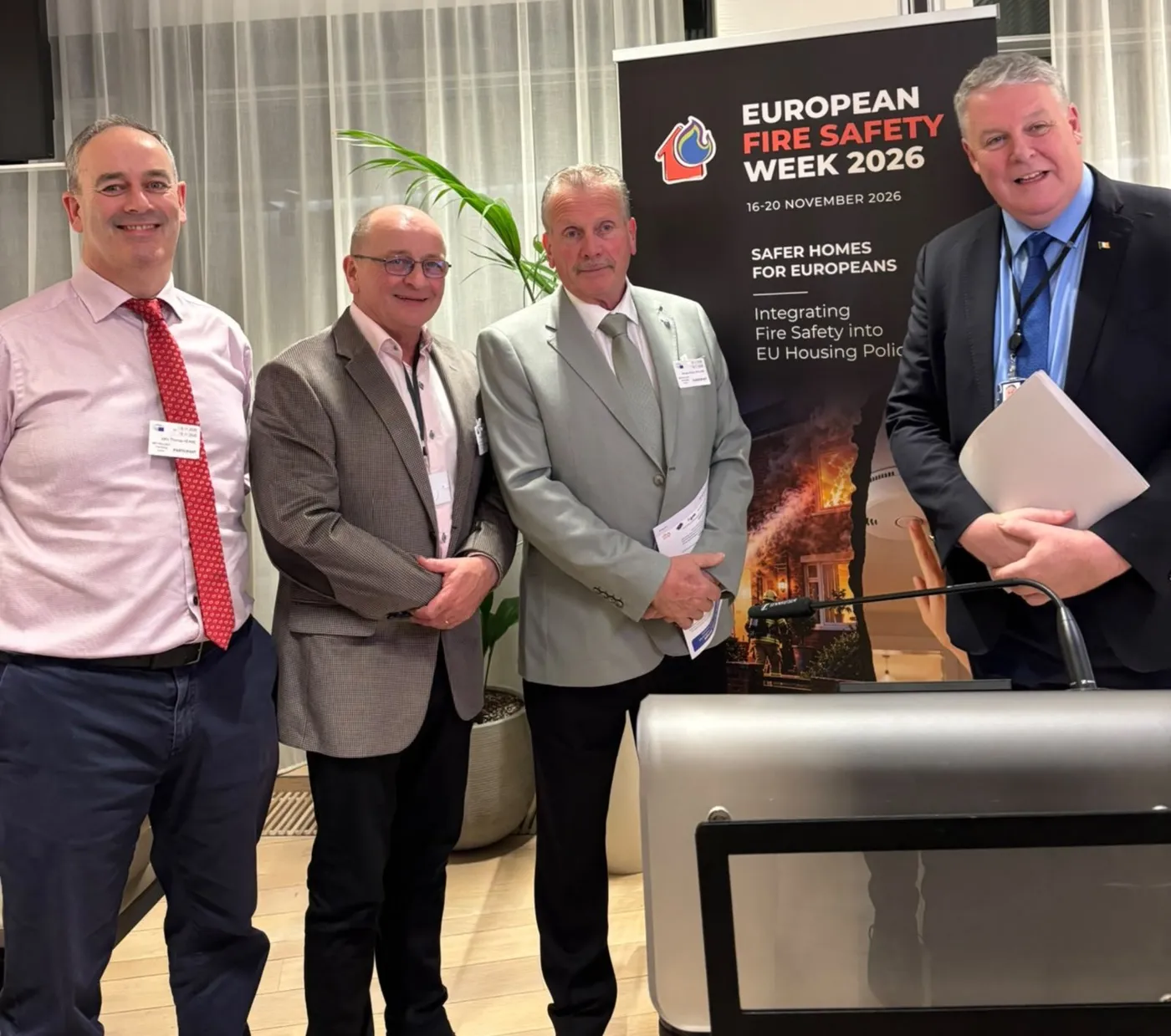
Ciaran welcomed four local firefighters to the European Parliament for “Safer Homes for Europeans: Integrating Fire Safety into EU Housing Policy”, held on 18 November during European Fire Safety Week.
Ciaran: Government should borrow from the European Investment Bank to deal with shameful housing record as homelessness exceeds 18,000
Speaking in the European Parliament’s Special Committee on the Housing Crisis, where he is Vice-Chair, Ciaran challenged the Government over the latest figures: 18,065 people, including 5,897 children, in emergency accommodation.