The EU KIDS Act is “long overdue”
Ciaran welcomed the Commission’s planned EU KIDS Act on children’s online safety and said the focus must turn to enforcing the new under-13 social media ban.
Ciaran welcomed the European Commission’s planned EU KIDS Act on children’s online safety, describing the measure as long overdue and saying that the argument must now shift from announcing rules to enforcing them. The proposal is the Commission’s attempt to set a single European standard for how online platforms treat children, including a ban on social media use by children under thirteen.
He said the package was a welcome step in the right direction, and pointed to the risks that prompted it: platform design that is deliberately addictive, exposure to harmful content and the danger of online grooming. But his central point was about follow-through. He argued that officials would need to put in place “a very strong and punitive regime to ensure that the new ban is enforced in all member states without exception”, and warned that the Commission has already found it difficult to supervise compliance under existing digital rules.
“The focus must now turn to the policing of the new under 13 social media ban.”
Ciaran also made the case for uniformity across the Union. A child’s level of protection, he said, should not depend on which member state they happen to live in. That matters in practice because the largest platforms are regulated from wherever they have established their European headquarters, and a great many of them are established in Ireland, which places an unusual share of the enforcement burden on Irish authorities. He called for tangible supervisory operations and urgent, swift responses when violations are found, and argued that where a company cannot demonstrate that its service is safe for minors, it should face meaningful restrictions on its access to them.
What the law would sit on top of
The European Union already has a framework for this in the Digital Services Act, which came fully into force in 2024. It obliges very large online platforms to assess the systemic risks their services create, including risks to the physical and mental wellbeing of minors, and to put measures in place to reduce them. It bans advertising targeted at children on the basis of profiling, and it gives the Commission direct supervisory powers over the biggest platforms, backed by fines of up to six per cent of global turnover. The criticism, from parents’ groups and from members of the Parliament, has been that investigations move slowly and that the rules have not yet visibly changed what children encounter on their phones.
An age limit is straightforward to state and difficult to apply. Verifying that a user is over thirteen without requiring everybody to hand over identity documents is a genuine technical and privacy problem, and the Commission has been working on age-verification approaches that confirm an age without revealing who the person is. A Commission proposal is only the start: the text must be agreed by the European Parliament and by the of member state governments under the ordinary legislative procedure before it becomes law, and both institutions can amend it. Ciaran’s position is that the enforcement machinery should be settled during that process rather than left to be worked out afterwards.
Read moreLongford Leader Ireland Live
The EU is a party to the UN Convention on the Rights of Persons with Disabilities. Its Accessibility Act sets rules for products and services, and EU funds can support the move from institutional to community-based care.
Parliament’s Disability Intergroup brings MEPs from all groups together on these issues. Ciaran sits on its bureau for Renew Europe.
Related.
Ciaran: men find it hardest to talk openly about loneliness
Ahead of a European Parliament event on social isolation, loneliness, anxiety and addiction, Ciaran said men, and older men in particular, struggle most to speak openly about loneliness, and that public figures should speak up.
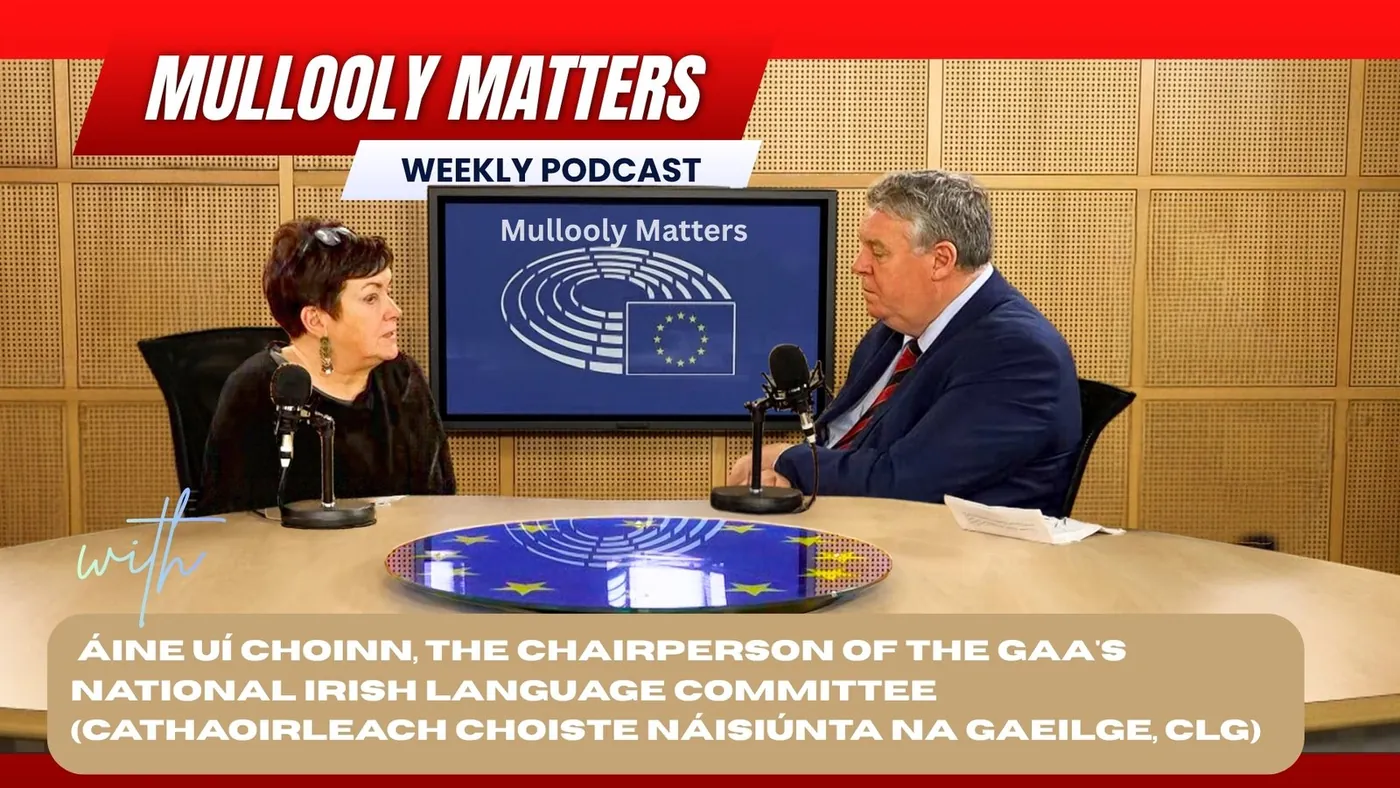 Mullooly Matters
: The Right to Stay – Can Rural Women Build a Future at Home?
Recorded in Brussels during Gender Equality Week, Ciaran talks to Áine Uí Choinn, chairperson of the GAA’s National Irish Language Committee, about what it would take for women and young people to build a life in rural Ireland and stay.
“Every woman deserves a pathway to safety and freedom”
After the latest update from Women’s Aid’s Femicide Watch, Ciaran called for urgent action to protect women experiencing domestic violence.