Longford Men’s Shed visits the European Parliament
At the end of June 2025 Ciaran welcomed members of Longford Men’s Shed to the European Parliament.
Ciaran welcomed members of Longford Men’s Shed to the European Parliament, hosting a group from his home county on a visit to the institution he was elected to in June 2024. Visits of this kind are arranged through each member’s office, and they involve a tour of the building, an explanation of how the Parliament works, and usually a session in which the visitors put their own questions to their MEP.
The Men’s Shed movement began in Australia and spread rapidly through Ireland over the past fifteen years. A shed is a workshop and meeting place where men — often retired, often recently bereaved, sometimes out of work — gather to make things, repair things and talk. The ostensible purpose is woodwork, metalwork, gardening or restoration. The real purpose, as anyone involved will say directly, is company. Isolation among older men in rural areas is a serious and well-documented problem, and the sheds have proved to be one of the few interventions that reaches people who would never attend anything described as a support service.
Why the visits matter
The European Parliament can seem remote in a way no other institution Irish people deal with quite manages. It sits in two countries, it works in twenty-four languages, it legislates through procedures with names that mean nothing outside Brussels, and its decisions arrive at home already translated into national rules. Standing in the hemicycle in Strasbourg or the chamber in Brussels, and seeing the scale of the room and the interpreters’ booths ranged around it, does more to explain the institution than any amount of written material.
There is a practical dimension too. The Parliament supports visitor groups from every member state, and the visits are one of the few routine points of contact between the institution and the people it serves. For a group from a town in Longford, the visit typically covers how a law is made under the ordinary legislative procedure, what the political groups are and how speaking time is divided among them, and what their own MEP actually does in the committees he sits on.
In Ciaran’s case that is the Agriculture and Rural Development Committee, the Regional Development Committee and the Special Committee on the Housing Crisis, where he is vice-chair. He is also the Parliament’s on the — the European money intended to support midlands communities through the end of peat extraction and the closure of the ESB power stations, a subject on which a group from Longford is likely to have opinions of its own.
He is from Lanesborough in County Longford and spent twenty-six years as RTÉ’s Midlands Correspondent before his election. Hosting a group from home in a building in Brussels is a small thing in the scheme of a parliamentary term. It is also the kind of thing that decides whether people feel the institution belongs to them.
The EU is a party to the UN Convention on the Rights of Persons with Disabilities. Its Accessibility Act sets rules for products and services, and EU funds can support the move from institutional to community-based care.
Parliament’s Disability Intergroup brings MEPs from all groups together on these issues. Ciaran sits on its bureau for Renew Europe.
Related.
Ciaran: men find it hardest to talk openly about loneliness
Ahead of a European Parliament event on social isolation, loneliness, anxiety and addiction, Ciaran said men, and older men in particular, struggle most to speak openly about loneliness, and that public figures should speak up.
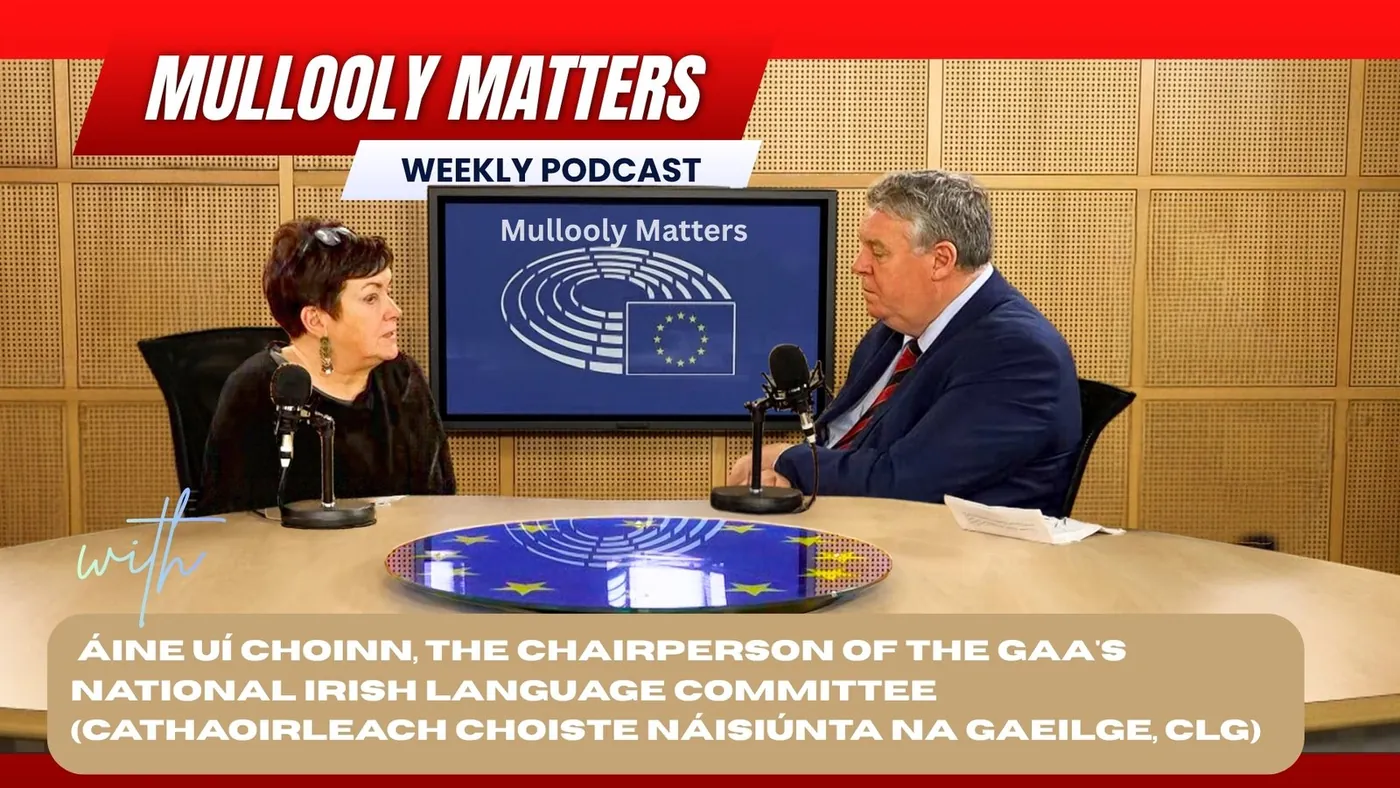 Mullooly Matters
: The Right to Stay – Can Rural Women Build a Future at Home?
Recorded in Brussels during Gender Equality Week, Ciaran talks to Áine Uí Choinn, chairperson of the GAA’s National Irish Language Committee, about what it would take for women and young people to build a life in rural Ireland and stay.
“Every woman deserves a pathway to safety and freedom”
After the latest update from Women’s Aid’s Femicide Watch, Ciaran called for urgent action to protect women experiencing domestic violence.