At the Model Council of the EU debate in Dublin Castle
Ciaran attended the Model Council of the EU, a debating event for second-level students, at Dublin Castle.
Ciaran attended the Model of the European Union at Dublin Castle, an annual debating event in which second-level students take on the roles of national ministers and negotiate a piece of European legislation to a conclusion. Students are assigned a member state, research its position, and then have to do what real ministers do: argue, trade, build alliances and find a text that enough countries can live with.
The exercise is built around the Council of the European Union, which is the part of the system that Irish people hear least about and which decides most. The Council is where national ministers meet — agriculture ministers for farm files, finance ministers for budgetary ones — and together with the European Parliament it must agree the identical text of a proposal before it becomes law. Most decisions are taken by , meaning a proposal passes unless enough states oppose it to form a blocking minority of at least four states representing more than thirty-five per cent of the Union’s population.
Why the simulation teaches the right lesson
That arithmetic is the single most useful thing a student can take away, because it explains almost everything about how Ireland operates in Europe. A country with roughly one per cent of the Union’s population cannot block anything alone and cannot win anything alone. It can only achieve an outcome by assembling a coalition, which means understanding what other governments want, offering something in return and starting early. A student who spends a day discovering that a firmly stated national position achieves nothing without allies has learned more about European politics than any textbook chapter delivers.
It is also directly relevant to the arguments Ciaran has been making in his own work. His criticism of the Irish Government’s approach to the EU– trade agreement has rested on exactly this point: that opposing an agreement in public while failing to canvass other capitals systematically does not produce a blocking minority. The same logic applies to the negotiations on the next European budget and on the future of cohesion policy.
Dublin Castle is a fitting venue, since it has hosted the formal business of Ireland’s presidencies of the Council of the European Union. The presidency rotates between member states every six months, and the country holding it chairs Council meetings, sets priorities and brokers compromises between the other twenty-six. Ireland has held it on several occasions and its officials have a strong reputation for the unglamorous work of finding a text everyone can accept.
Ciaran has made time for school and student engagement a recurring part of his work, visiting primary schools for Europe Day and hosting constituency groups at the Parliament in Brussels. He represents Midlands–North-West, the largest of Ireland’s three European constituencies, and spent twenty-six years as RTÉ’s Midlands Correspondent before his election in June 2024 — a career in explaining institutions to people who do not work in them, which is more or less what a Model Council sets out to do.
The EU is a party to the UN Convention on the Rights of Persons with Disabilities. Its Accessibility Act sets rules for products and services, and EU funds can support the move from institutional to community-based care.
Parliament’s Disability Intergroup brings MEPs from all groups together on these issues. Ciaran sits on its bureau for Renew Europe.
Related.
Ciaran: men find it hardest to talk openly about loneliness
Ahead of a European Parliament event on social isolation, loneliness, anxiety and addiction, Ciaran said men, and older men in particular, struggle most to speak openly about loneliness, and that public figures should speak up.
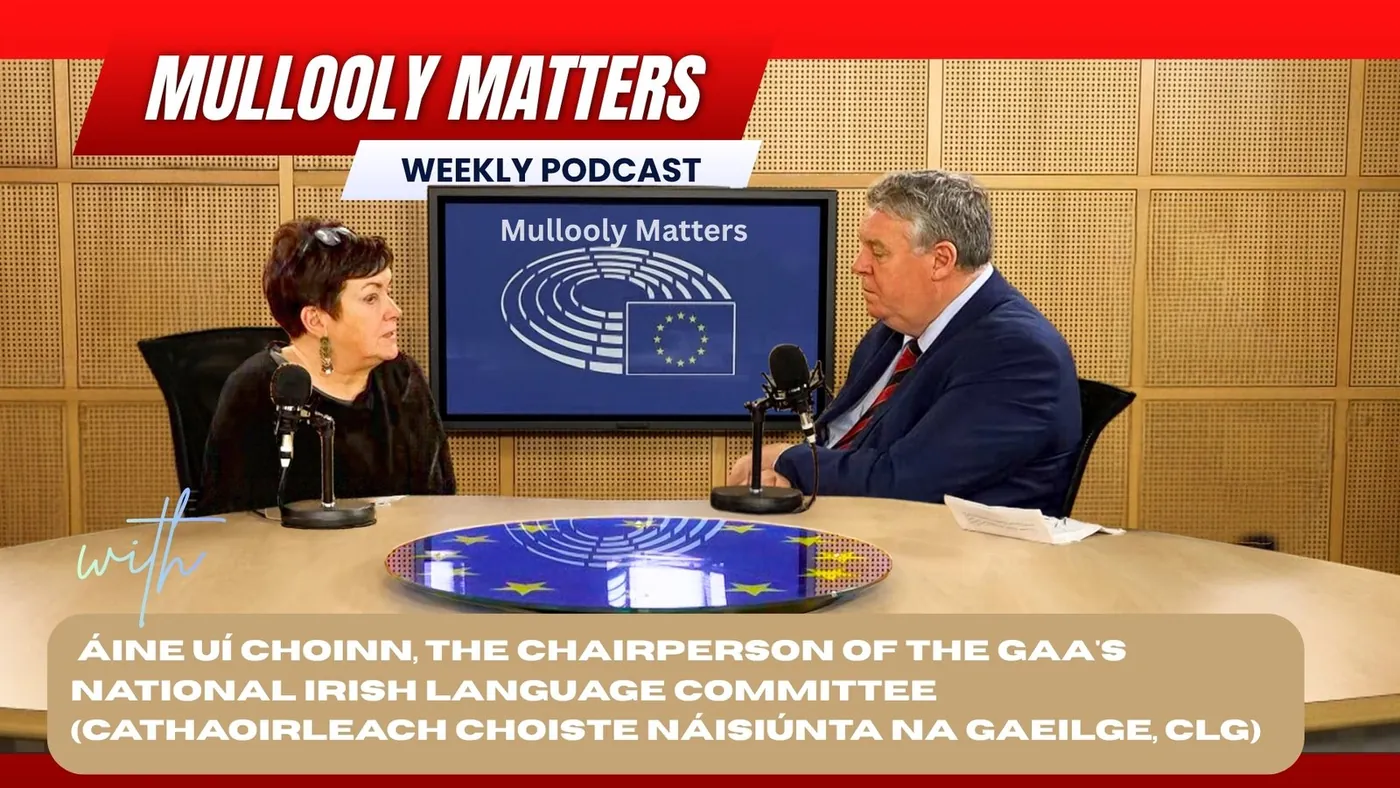 Mullooly Matters
: The Right to Stay – Can Rural Women Build a Future at Home?
Recorded in Brussels during Gender Equality Week, Ciaran talks to Áine Uí Choinn, chairperson of the GAA’s National Irish Language Committee, about what it would take for women and young people to build a life in rural Ireland and stay.
“Every woman deserves a pathway to safety and freedom”
After the latest update from Women’s Aid’s Femicide Watch, Ciaran called for urgent action to protect women experiencing domestic violence.