Meeting sought with Pieta’s chief executive over the Athlone centre closure
As a founding member of the original project, Ciaran asked Pieta CEO Stephanie Manahan to meet him in Athlone about the planned closure of the Sean Costello Street centre.
Ciaran asked Stephanie Manahan, the chief executive of Pieta, to meet him in Athlone to discuss the planned closure of the charity’s centre on Sean Costello Street. He made the request as a founding member of the original project that brought a Pieta service to the town, and asked that the decision be reconsidered or at least explained to the community that had raised the money for it.
Pieta provides free therapeutic services to people in suicidal distress, people who engage in self-harm, and people bereaved by suicide. It operates through a network of centres around the country together with a twenty-four hour crisis helpline and text service. The Athlone centre served a wide catchment across the midlands, drawing people from Westmeath, Roscommon, Offaly, Longford and beyond, in a part of the country where specialist mental health services are thinly spread and where the alternative is frequently a long journey to Dublin or Galway.
The argument about a centre closing is rarely only about the building. Services of this kind depend on referral relationships built up over years with general practitioners, schools, Garda stations, hospital emergency departments and community groups, and on people knowing where to send someone at the point of crisis. Those networks take a long time to build and are lost quickly. For a person in acute distress, the practical difference between a service forty minutes away and one two hours away can be decisive.
The funding background
Pieta is a charity and raises the great bulk of its income from public donation and fundraising, most visibly through Darkness Into Light, the dawn walk held each May in hundreds of locations at home and abroad. It also receives statutory funding through the Health Service Executive under service level agreements. Charities delivering frontline mental health services have reported sustained pressure in recent years from rising costs, rising demand and funding that has not kept pace with either, and centre consolidation is one of the responses available to a board trying to protect the service overall.
That makes the question Ciaran put a reasonable one to ask rather than an accusation. A community that fundraised to establish a service is entitled to hear directly from the organisation why it is being withdrawn, what will replace it, and how people in the catchment are expected to access help afterwards. His request was for a meeting in Athlone rather than correspondence, which is a request for that conversation to happen in front of the people affected.
Mental health is a national competence and the European Union has no role in deciding where an Irish charity locates a centre. Ciaran has, however, raised mental health and suicide prevention in the European Parliament, including in the context of rural isolation and of the pressures on farm families, and has argued that the Union’s public health programmes should give more weight to community-based services. The Athlone intervention was constituency work of the most local kind, made by someone who had been involved in the service from the start.
Read moreWestmeath Examiner Roscommon Herald Shannonside
The EU is a party to the UN Convention on the Rights of Persons with Disabilities. Its Accessibility Act sets rules for products and services, and EU funds can support the move from institutional to community-based care.
Parliament’s Disability Intergroup brings MEPs from all groups together on these issues. Ciaran sits on its bureau for Renew Europe.
Related.
Ciaran: men find it hardest to talk openly about loneliness
Ahead of a European Parliament event on social isolation, loneliness, anxiety and addiction, Ciaran said men, and older men in particular, struggle most to speak openly about loneliness, and that public figures should speak up.
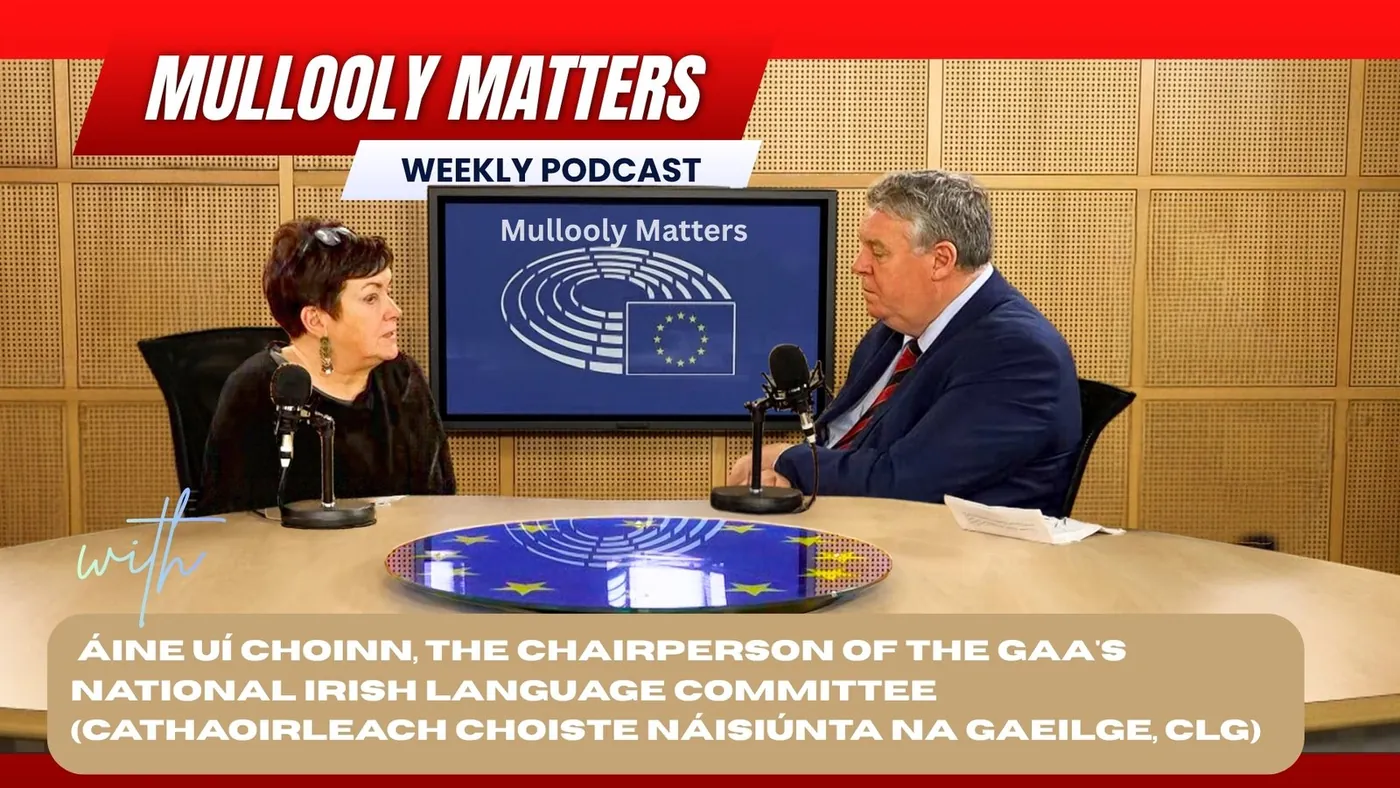 Mullooly Matters
: The Right to Stay – Can Rural Women Build a Future at Home?
Recorded in Brussels during Gender Equality Week, Ciaran talks to Áine Uí Choinn, chairperson of the GAA’s National Irish Language Committee, about what it would take for women and young people to build a life in rural Ireland and stay.
“Every woman deserves a pathway to safety and freedom”
After the latest update from Women’s Aid’s Femicide Watch, Ciaran called for urgent action to protect women experiencing domestic violence.