“Bowled over” by the Midlands’ young scientists
At the BT Young Scientist Exhibition, Ciaran praised projects from Laois and Westmeath, from CBS Portlaoise student Joshua Corbett’s brain-disease research to a wave-powered generator nicknamed “The Swellerator”.
Ciaran Mullooly spent time at the BT Young Scientist and Technology Exhibition at the RDS in Dublin in January 2025, and came away, in his own phrase, bowled over by the quality of the entries from the midlands. “The creativity and determination of these young scientists from Laois is truly inspiring,” he said of the county’s contingent.
Among the projects he singled out was the work of Joshua Corbett of CBS Portlaoise, whose entry — titled “Breaking Barriers: Revolutionising the Treatment of Brain Diseases” — examined ways of crossing the blood–brain barrier to deliver treatment for conditions including glioblastoma. The blood–brain barrier is one of the hardest problems in neuropharmacology: the same selectivity that protects the brain from circulating toxins also excludes the great majority of therapeutic molecules, and finding a way through it is a live frontier of international research.
From Westmeath came The Swellerator, a wave energy device designed by students Gavin Quilty and Fionn Murphy to generate power from the swell close to shore. Quilty explained that the idea had come from watching waves in action. Other Westmeath entries included a tree-nut-based water filter for cleaning cattle drinkers, developed at Moate Community School, a UV protection base coat for nail salon clients, and a natural fungal treatment for ringworm in cattle, inspired by techniques used in ancient mummification.
“The creativity and determination of these young scientists from Laois is truly inspiring.”
The mix is a fair reflection of what the exhibition produces year after year: a handful of projects at the edge of serious biomedical research sitting alongside a great many that begin with a practical problem on a farm or in a workplace and work outwards. The agricultural entries in particular — the cattle drinker filter, the ringworm treatment — are the kind of applied problem-solving that the region’s economy runs on.
Why an MEP was there
The visit was not incidental to the job. Ciaran has consistently argued that the midlands and north-west need a knowledge economy to replace the employment lost with peat production and the closure of the ESB stations, and much of his work on the has been directed at exactly that — skills, training and enterprise supports in the affected regions. He has also pushed the education side of the same argument, welcoming Just Transition money that helped Longford students into construction through Safe Pass training at St Mel’s, and backing the expansion of the Technological University of the Shannon as the anchor of the Athlone green city plan.
Read moreMidlands 103
- 1Commissionproposes a law
- 2Parliament committeeamends it: this is where MEPs like Ciaran table amendments
- 3Plenary + Councileach adopt a position
- 4TrilogueParliament, Council and Commission agree a final text
MEPs amend and vote on EU laws alongside national governments, question the Commission, and work in specialist committees where most detailed decisions are made. Ciaran sits on the Agriculture (AGRI) and Regional Development (REGI) committees and is Vice-Chair of the Special Committee on the Housing Crisis (HOUS).
A typical month includes committee weeks in Brussels, a plenary week in Strasbourg and time in the constituency.
Related.
Ciaran hosts a European conference on island communities and the “Right to Stay” in Longford
“Sustainable Development, Depopulation and Connectivity for EU Islands: Challenges, Opportunities and the Right to Stay”, on Friday 27 November at Longford Rugby Club, 10am to 2:30pm. Free, with limited places.
 Office of Ciaran Mullooly MEP
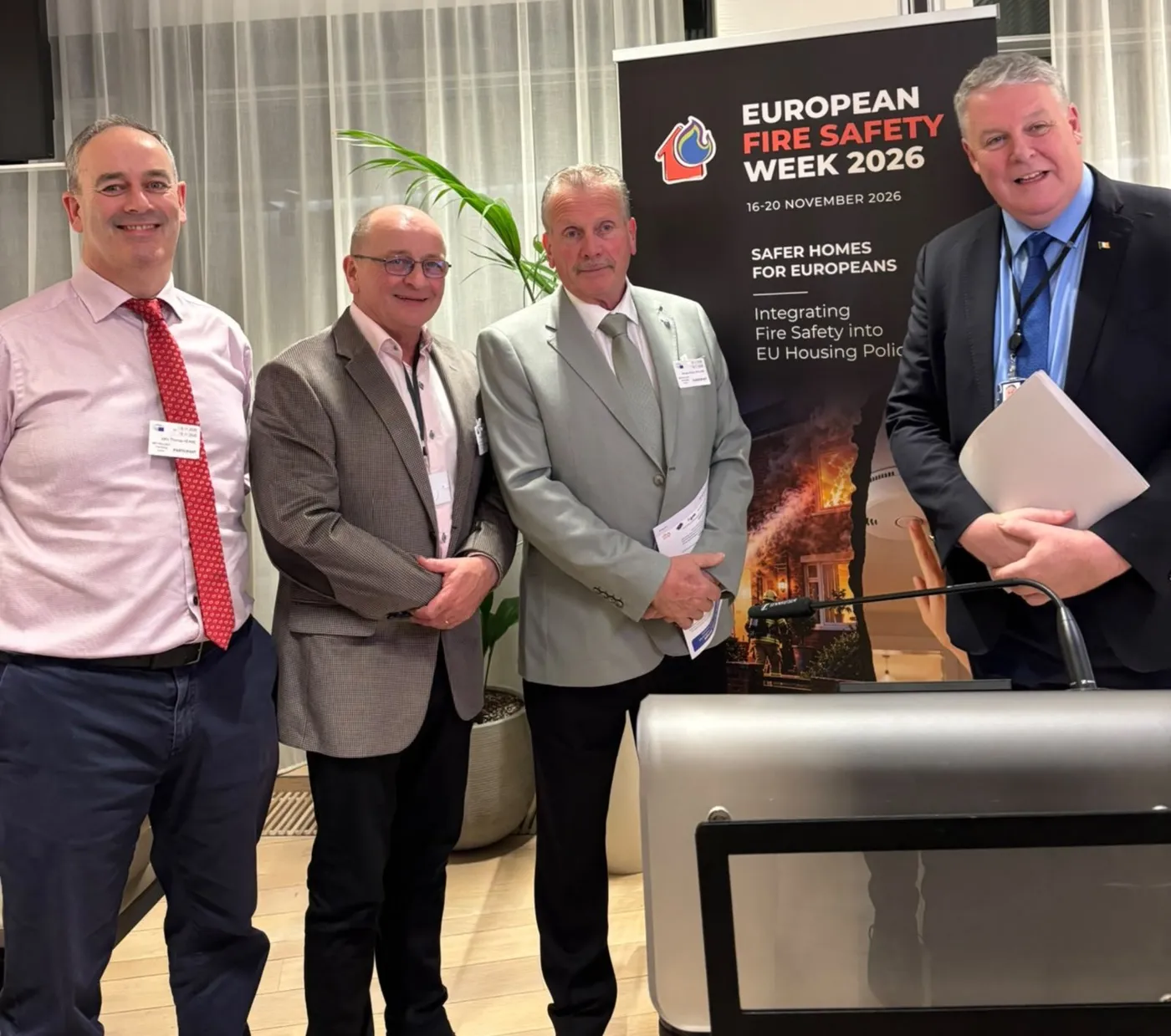
Ciaran pays tribute to local firefighters at European Parliament fire safety event
Ciaran welcomed four local firefighters to the European Parliament for “Safer Homes for Europeans: Integrating Fire Safety into EU Housing Policy”, held on 18 November during European Fire Safety Week.
Ciaran: Government should borrow from the European Investment Bank to deal with shameful housing record as homelessness exceeds 18,000
Speaking in the European Parliament’s Special Committee on the Housing Crisis, where he is Vice-Chair, Ciaran challenged the Government over the latest figures: 18,065 people, including 5,897 children, in emergency accommodation.