Pressing Commissioner Ferreira for Bord na Móna and ESB workers
In Strasbourg, Ciaran told Cohesion Commissioner Elisa Ferreira that Ireland had spent only 5.4% of its cohesion allocation, and called for less red tape and a Just Transition Fund targeted at the families of the peat bog regions.
In Strasbourg, Ciaran put a blunt figure to the Commissioner for Cohesion and Reforms, Elisa Ferreira: Ireland had spent only 5.4% of the cohesion money allocated to it. He argued that the obstacle was not a shortage of worthwhile projects but the weight of administration standing between a community group or a local authority and the funding it was entitled to apply for.
“So there’s a clear need to ensure that administrations and beneficiaries can navigate the systems better. It’s imperative we cut through the red tape when we can.”
He acknowledged that the had made progress, but told the Commissioner it was not yet doing enough for the families who lost their incomes when carbon-intensive industry wound down. His proposal was for a geographically targeted approach: defined zones around the affected areas within which businesses could be attracted and employment created, rather than money spread thinly across a wide region on the basis of administrative boundaries.
“We look at the peat bog land in Ireland. We look at the specific area around that and try and target the families in that area so we can assist them in the future.”
He pointed to what has been done in the Polish coal-mining regions as a model worth copying, where designated transition zones have been used to concentrate investment and incentives in the places that actually lost the jobs. The Irish equivalent is the belt of former Bord na Móna bogs and the ESB stations they supplied, running through Offaly, Longford, Westmeath, Laois and into Roscommon and Galway.
What cohesion policy is
Cohesion policy is the part of the European budget intended to narrow the gap between the Union’s richer and poorer regions. It works through multi-year programmes agreed between the Commission and each member state, with money drawn down as projects are completed and certified. The Just Transition Fund is the strand created specifically for regions dependent on coal, lignite, oil shale or peat, to help them through the move away from those industries. Ireland’s allocation is around €169 million to 2027 and is managed by the Eastern and Midland Regional Assembly.
A low drawdown rate is a serious matter, because cohesion money operates on deadlines. Funds that are not committed and spent within the programme period can be lost, returned to the European budget rather than carried forward. For communities in the midlands that have watched an industry close around them, the prospect of money allocated to them expiring unspent because the application process defeated the people it was meant to serve is not an abstract administrative failure.
Ciaran, a member of the Regional Development Committee and the Parliament’s on how cohesion policy supports regions moving away from carbon-intensive industry, has made simplification the consistent theme of his work in this area. The families he was speaking about are those of Bord na Móna and ESB workers, many of them in his own part of Longford and Roscommon, who spent working lives on the bogs and in the stations and who have not, in his view, seen enough of the money that was raised in their name.
Read moreRoscommon Herald
Ciaran’s report: pre-finance up to 90% for low-risk groups, local grant managers, and a stand-alone JTF 2.0 after 2027.
Sources: Westmeath Independent, 4 July 2025; Offaly Express, 25 February 2026.
The Just Transition Fund supports regions most affected by the move away from fossil fuels, such as the Irish Midlands after the end of peat-fired electricity. Ireland’s allocation of around €169 million runs to 2027, matched by national funding.
In Ireland it is managed by the Eastern and Midland Regional Assembly, with schemes delivered through bodies such as Pobal, Fáilte Ireland and county councils. As Parliament’s rapporteur, Ciaran set out how a better-funded, simpler JTF 2.0 should work after 2027.
Related.
Ciaran hosts a European conference on island communities and the “Right to Stay” in Longford
“Sustainable Development, Depopulation and Connectivity for EU Islands: Challenges, Opportunities and the Right to Stay”, on Friday 27 November at Longford Rugby Club, 10am to 2:30pm. Free, with limited places.
 Office of Ciaran Mullooly MEP
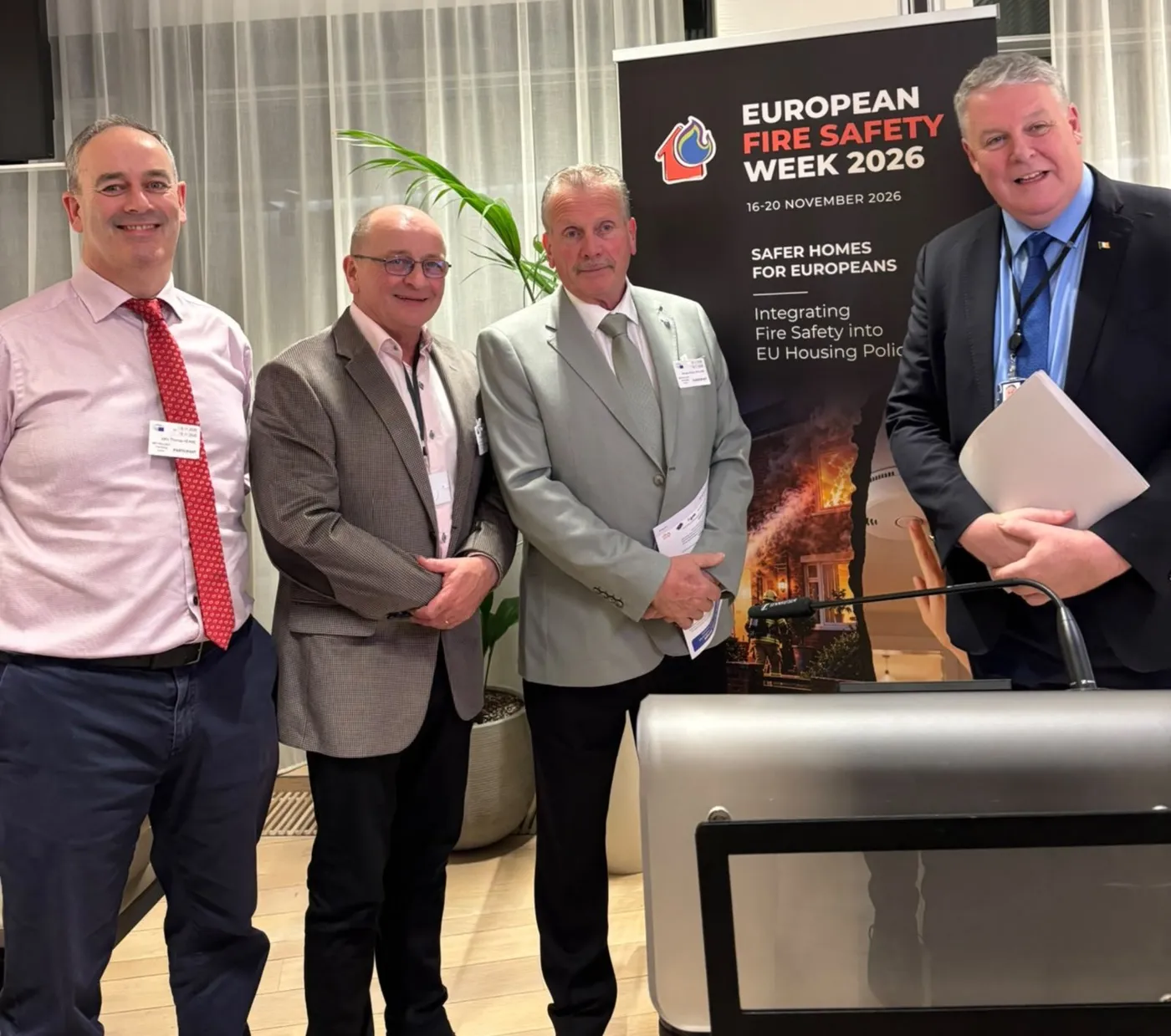
Ciaran pays tribute to local firefighters at European Parliament fire safety event
Ciaran welcomed four local firefighters to the European Parliament for “Safer Homes for Europeans: Integrating Fire Safety into EU Housing Policy”, held on 18 November during European Fire Safety Week.
Ciaran: Government should borrow from the European Investment Bank to deal with shameful housing record as homelessness exceeds 18,000
Speaking in the European Parliament’s Special Committee on the Housing Crisis, where he is Vice-Chair, Ciaran challenged the Government over the latest figures: 18,065 people, including 5,897 children, in emergency accommodation.