A letter to every Irish MEP: represent Ireland’s interests on Mercosur
After the Athlone protest, Ciaran wrote to all Irish MEPs asking them to reject the Mercosur deal, and joined colleagues in approaching wavering MEPs from Italy and France.
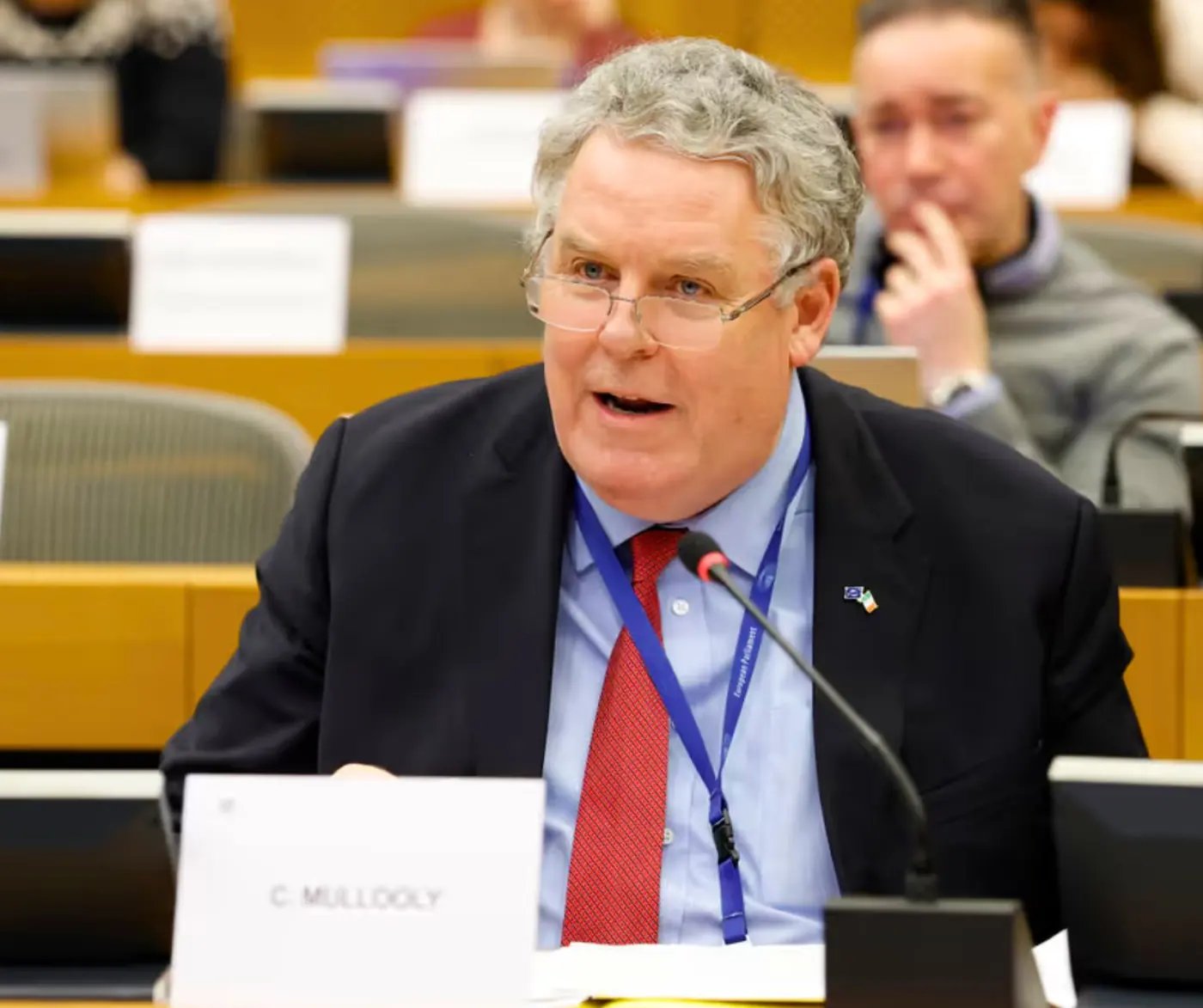
Two days after the Athlone protest, Ciaran wrote to every Irish member of the European Parliament asking them to reject the EU– trade agreement. Ireland returns fourteen MEPs across three constituencies, drawn from most of the political groups in the chamber, and they do not vote as a bloc. The letter was an attempt to make them do so on this one file.
He followed it by working with colleagues to approach undecided members from other national delegations, particularly Italy and France, where farm organisations had also mobilised against the deal. That is where the arithmetic actually lay. Fourteen Irish votes cannot carry anything in a chamber of 720, but they can be part of a coalition assembled across group lines, and the members most likely to join it are those whose own farmers are protesting.
The immediate objective was the question of whether the Parliament would ask the Court of Justice for an opinion on the legality of how the Commission had packaged Mercosur. The Commission had split the agreement in two, separating the trade elements — which the European Union can conclude alone — from a wider political agreement requiring ratification by national parliaments. The referral question is whether that split is permitted under the Treaties.
Why letters between MEPs matter
Coordination of this kind is most of what happens in a parliament without a government majority to whip. Members belong to political groups that broadly determine how they vote on most files, but on trade agreements with strong national dimensions the group lines soften and national delegations negotiate among themselves. A letter puts a colleague on the record, obliges a response, and makes a later vote against the request harder to explain at home.
Mercosur — Brazil, Argentina, Paraguay and Uruguay, with Bolivia acceding — reached political agreement with the European Union at the end of 2024 after more than twenty years of negotiation. Tariffs would fall in both directions: European manufacturers gain access to a large protected market, and South American agricultural produce, including a substantial tariff-rate quota for beef, enters Europe on far better terms than at present. Irish opposition is concentrated on the beef quota and on the fact that European producers comply with veterinary, welfare and environmental rules that imported product does not have to meet.
On 21 January the Parliament voted 334 to 324 to seek the Court’s opinion. Four Irish MEPs voted against the referral. A margin of ten votes in a chamber of that size is the arithmetic that justifies writing letters, and it is the reason Ciaran and his colleagues spent the intervening days working the corridors as well as the chamber.
Read moreHighland Radio Independent.ie
Source: TheJournal.ie, 21 January 2026. Seat layout is illustrative.
The Commission negotiates trade agreements on behalf of all 27 member states. National governments approve them in the Council, and the European Parliament must give its consent. “Mixed” agreements, which cover areas where member states keep powers, must also be ratified by every national parliament.
For Mercosur, the Commission split the deal into an interim trade agreement and a separate partnership agreement, so the trade part would not need ratification by national parliaments. In January 2026 the Parliament voted 334–324 to ask the Court of Justice whether that approach is lawful.
Related.
 Diliff, CC BY-SA 3.0, Wikimedia Commons
‘UK must ban Brazilian beef next’: Ciaran welcomes the EU–UK food and agriculture agreement
Ciaran welcomed the conclusion of negotiations on a new EU–UK agreement on food, agriculture, animals and plants, due to apply from 1 March 2028, and called for strong food-safety safeguards and no gaps for third-country imports.
 Wikimedia Commons
Ciaran tells ICOS: no change to animal transport rules, and they must take Ireland’s position into account
Ciaran, a full member of the AGRI Committee, met ICOS in the European Parliament for an update on the Commission’s proposed changes to EU animal transport rules. No changes have been agreed by Parliament’s Agriculture or Transport committees.
 Office of Ciaran Mullooly MEP
Commissioner Hansen agrees consumers need clearer food origin information, as Ciaran presses the case
At the Agriculture Committee, Ciaran asked how EU-funded promotion can make European origin clear while keeping Irish origin visible. Commissioner Christophe Hansen said European products “need to be visible” and that the gap Ciaran has raised is real.