“We’re very close” to the votes needed to reject Mercosur
After a vote to scrap Mercosur failed by around 60 votes with 80 MEPs abstaining, Ciaran said he was speaking directly to the abstainers to win them over. The deal would let in 99,000 tonnes of Mercosur beef at a 7.5% tariff.
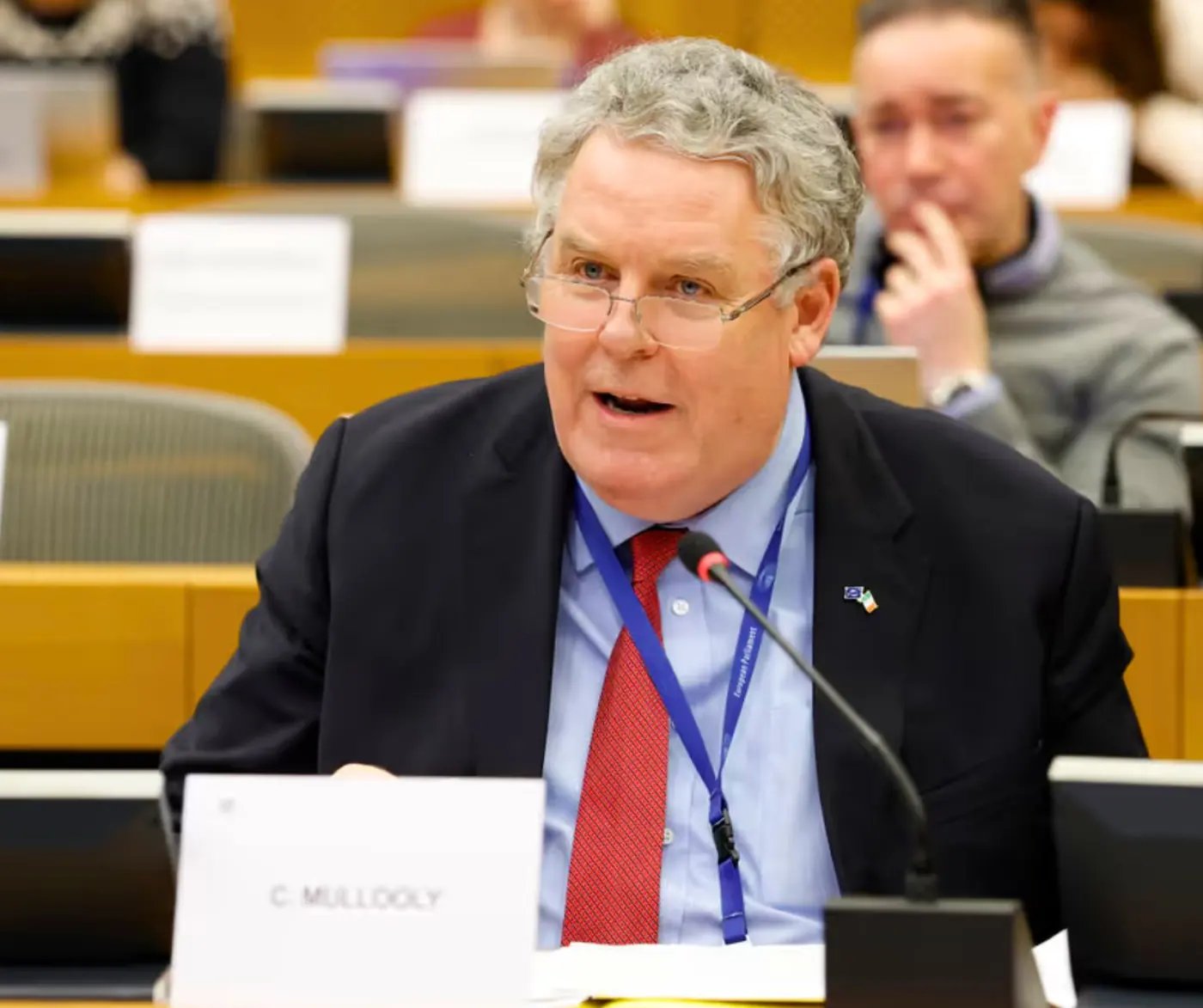
After a European Parliament vote aimed at scrapping the EU– trade agreement was defeated, Ciaran said the result was closer than many realised and that he had begun approaching the members who abstained. The motion was lost by what he described as “quite a small margin — about 60 votes”, with around eighty MEPs abstaining rather than voting either way.
“I feel, at this stage, we’re very close to getting enough support within the parliament to actually reject the deal.”
The eighty abstentions are the reason he is optimistic. In a chamber of 720 members, a bloc of that size is decisive, and an abstention is not a settled position — it is usually a member who has not been persuaded either way, or whose national delegation is divided, or who is waiting to see what the final text and any accompanying safeguards look like. Ciaran said many of the abstainers were Italian and from other member states with significant agricultural sectors, and that he had been speaking to them directly to set out the case against the agreement. Ahead of a further vote later in the year he said he expected to win over “more and more MEPs to support the opposition to the deal” and that “there is still all to play for”.
The beef quota
The provision at the centre of the Irish objection is a tariff-rate quota allowing 99,000 tonnes of Mercosur beef into the European market each year at a preferential tariff of 7.5 per cent, phased in over several years. A tariff-rate quota means a fixed volume enters at a reduced rate while anything above it pays the full duty. Because the European beef market is close to balance, additional volume at a preferential rate exerts downward pressure on price across the market, not only in the segment the imports directly compete in.
Ireland exports the overwhelming majority of the beef it produces, and the suckler herd that supplies much of it is concentrated in exactly the western, midland and border counties that make up Midlands–North-West. Margins in suckler farming are thin to the point of dependence on direct payments, so a movement in price of a few cents a kilogram is the difference between a viable year and an unviable one. The additional grievance is about standards: Mercosur beef is produced under different environmental, veterinary and welfare rules, and growth promoters prohibited in the European Union are used in some of those countries.
Ciaran also predicted that Fine Gael and Fianna Fáil MEPs, who he said were awaiting a revised text before committing, would ultimately have to oppose the agreement, arguing that they “will have no choice but [to] vote against it. They won’t be able to return to Ireland if they do vote in favour.” The agreement still requires the consent of the European Parliament and a in the of member state governments, which is why the work of counting votes and talking to abstainers goes on between formal votes rather than only at them.
Read moreAgriland
Source: TheJournal.ie, 21 January 2026. Seat layout is illustrative.
The Commission negotiates trade agreements on behalf of all 27 member states. National governments approve them in the Council, and the European Parliament must give its consent. “Mixed” agreements, which cover areas where member states keep powers, must also be ratified by every national parliament.
For Mercosur, the Commission split the deal into an interim trade agreement and a separate partnership agreement, so the trade part would not need ratification by national parliaments. In January 2026 the Parliament voted 334–324 to ask the Court of Justice whether that approach is lawful.
Related.
 Diliff, CC BY-SA 3.0, Wikimedia Commons
‘UK must ban Brazilian beef next’: Ciaran welcomes the EU–UK food and agriculture agreement
Ciaran welcomed the conclusion of negotiations on a new EU–UK agreement on food, agriculture, animals and plants, due to apply from 1 March 2028, and called for strong food-safety safeguards and no gaps for third-country imports.
 Wikimedia Commons
Ciaran tells ICOS: no change to animal transport rules, and they must take Ireland’s position into account
Ciaran, a full member of the AGRI Committee, met ICOS in the European Parliament for an update on the Commission’s proposed changes to EU animal transport rules. No changes have been agreed by Parliament’s Agriculture or Transport committees.
 Office of Ciaran Mullooly MEP
Commissioner Hansen agrees consumers need clearer food origin information, as Ciaran presses the case
At the Agriculture Committee, Ciaran asked how EU-funded promotion can make European origin clear while keeping Irish origin visible. Commissioner Christophe Hansen said European products “need to be visible” and that the gap Ciaran has raised is real.