No provisional Mercosur while the Court deliberates
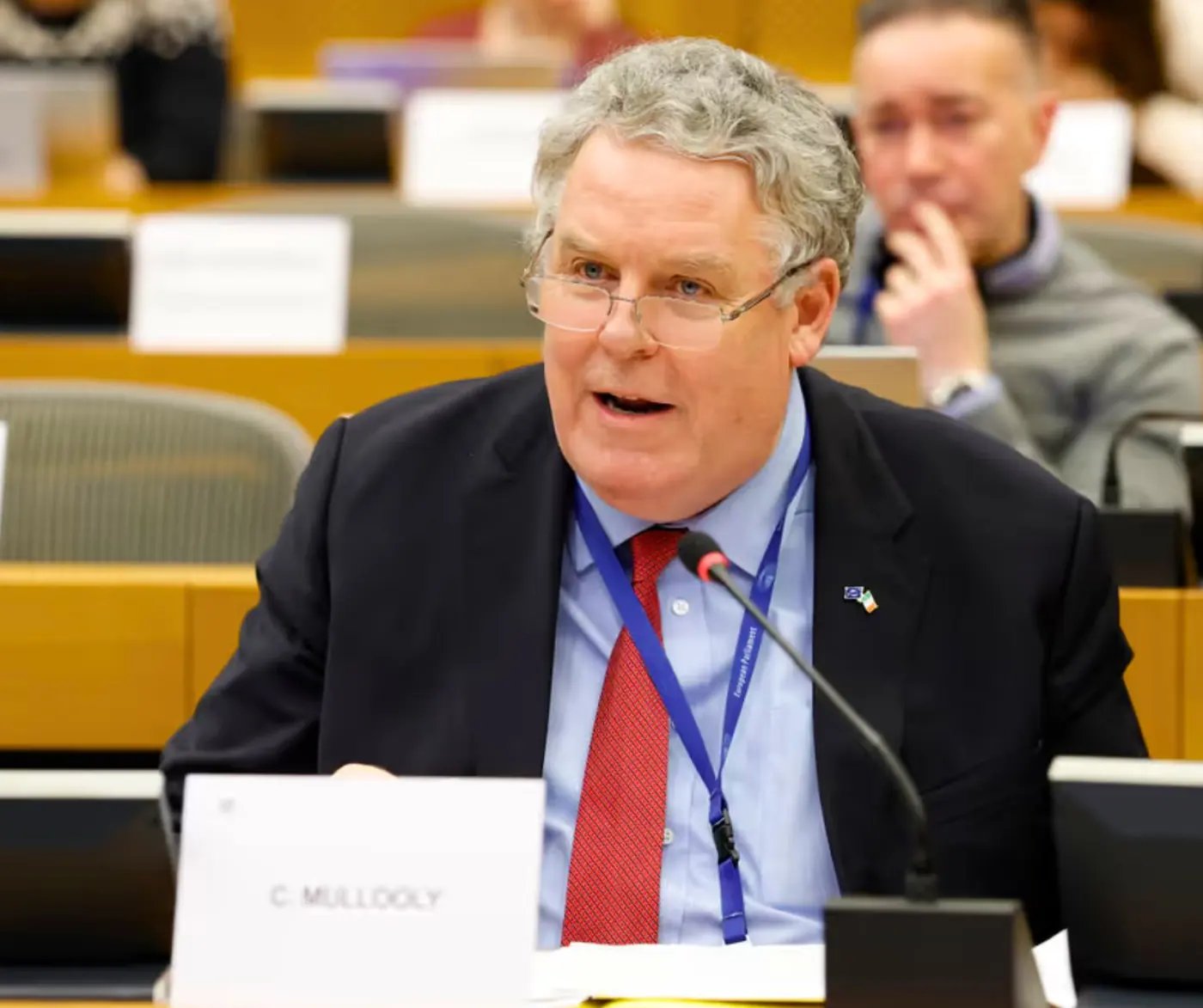
Ciaran wrote to the Commission President opposing any provisional application of Mercosur while the Court of Justice reviews it, reminding her that Commissioners had assured Parliament that trade deals would not apply before Parliament consented.
Ciaran wrote to the President of the European Commission opposing any attempt to apply the EU– trade agreement provisionally while the Court of Justice considers whether the Commission has acted within the EU Treaties. In the letter he reminded Ursula von der Leyen that Commissioners had given the European Parliament assurances that trade agreements would not be brought into force before Parliament had given its consent.
Provisional application is a real and regularly used mechanism, which is why the point is not academic. Where an agreement covers matters that fall within the European Union’s exclusive competence, the can decide to apply those parts before every ratification step is complete. It is normally justified as a way of avoiding years of delay while national parliaments work through their procedures. Its effect, though, is that tariff changes take practical effect on the ground before the democratic scrutiny has finished, and unwinding them afterwards is far harder than never starting them.
That is the sequence Ciaran argued must not happen here. In January 2026 the European Parliament voted narrowly to ask the Court of Justice for an opinion on whether the Commission was entitled to split the Mercosur package in two, separating a trade-only agreement that requires no ratification by national parliaments from a wider political agreement that does. Until the Court answers, the legal basis of the trade agreement is genuinely uncertain. Applying it in the meantime would, on his argument, pre-empt the Court and make the referral meaningless.
What Mercosur is
Mercosur is a South American customs union comprising Brazil, Argentina, Paraguay and Uruguay, with Bolivia acceding. Negotiations on an agreement with the European Union ran for more than two decades before political agreement was reached at the end of 2024. The deal would cut tariffs in both directions: European carmakers, machinery firms and chemical producers would gain access to a large protected market, while South American agricultural produce, including a substantial tariff-rate quota for beef, would enter Europe on much better terms than at present.
For Ireland, and especially for the western and midland counties Ciaran represents, the beef quota is the issue. The suckler herd is concentrated in exactly those counties, farm incomes there depend heavily on beef prices, and Irish producers operate under environmental, veterinary and animal welfare rules that imported product does not have to meet. Farm organisations across Ireland, France, Poland and elsewhere have opposed the agreement on those grounds.
The letter is one step in a longer sequence rather than a decision in itself. The Commission is not obliged to answer it in any particular way, and the timing of any Council decision on provisional application is a matter for the member state governments. What the letter does is put the assurances previously given to Parliament on the record, and make it harder to proceed as if they had not been given.
Read moreLaois Nationalist
Source: TheJournal.ie, 21 January 2026. Seat layout is illustrative.
The Commission negotiates trade agreements on behalf of all 27 member states. National governments approve them in the Council, and the European Parliament must give its consent. “Mixed” agreements, which cover areas where member states keep powers, must also be ratified by every national parliament.
For Mercosur, the Commission split the deal into an interim trade agreement and a separate partnership agreement, so the trade part would not need ratification by national parliaments. In January 2026 the Parliament voted 334–324 to ask the Court of Justice whether that approach is lawful.
Related.
 Diliff, CC BY-SA 3.0, Wikimedia Commons
‘UK must ban Brazilian beef next’: Ciaran welcomes the EU–UK food and agriculture agreement
Ciaran welcomed the conclusion of negotiations on a new EU–UK agreement on food, agriculture, animals and plants, due to apply from 1 March 2028, and called for strong food-safety safeguards and no gaps for third-country imports.
 Wikimedia Commons
Ciaran tells ICOS: no change to animal transport rules, and they must take Ireland’s position into account
Ciaran, a full member of the AGRI Committee, met ICOS in the European Parliament for an update on the Commission’s proposed changes to EU animal transport rules. No changes have been agreed by Parliament’s Agriculture or Transport committees.
 Office of Ciaran Mullooly MEP
Commissioner Hansen agrees consumers need clearer food origin information, as Ciaran presses the case
At the Agriculture Committee, Ciaran asked how EU-funded promotion can make European origin clear while keeping Irish origin visible. Commissioner Christophe Hansen said European products “need to be visible” and that the gap Ciaran has raised is real.