Public trust in RTÉ still recovering, says former correspondent turned MEP
Reacting to RTÉ’s 2025 annual report, Ciaran said public confidence in the broadcaster had not fully recovered from its earlier payments controversies.
Reacting to the publication of RTÉ’s annual report for 2025, Ciaran said that public confidence in the national broadcaster had still not fully recovered from the payments controversies that engulfed it, a judgement delivered by someone who spent twenty-six years working there.
Ciaran was RTÉ’s Midlands Correspondent until he left to stand for the European Parliament in 2024, reporting from Longford, Roscommon, Westmeath, Offaly and the surrounding counties. That background gives his assessment a particular character: it is not the view of a critic looking in from outside, but of someone who knows how the organisation works, what regional staff do and what the reputational damage of the past few years has cost the people still doing the job.
The controversies at issue concerned undisclosed payments to a leading presenter, revealed in 2023, which led to the resignation of the Director-General, appearances before Oireachtas committees, external reviews and a period of sustained public anger. What followed included a fall in voluntary licence fee payments, an examination of the organisation’s governance and commercial arrangements, and a lengthy political argument about how public service broadcasting in Ireland should be funded at all.
Why trust is the whole asset
A public service broadcaster has no product other than credibility. Its journalism is only worth having if audiences believe it, and it is funded by a charge that citizens are asked to accept as a fair contribution to something held in common. Damage to the first undermines willingness to pay the second, and a funding shortfall then reduces the capacity to produce the journalism. The regional newsroom is usually among the first things squeezed in that cycle, which matters disproportionately in counties where local radio and a weekly newspaper are the only other sources of accountability reporting.
The European dimension is real but indirect. The European Media Freedom Act, agreed in 2024, sets out requirements intended to protect the independence of public service media across the Union: transparent and non-discriminatory appointment procedures for leadership, adequate and predictable funding determined by transparent criteria, and safeguards against political interference in editorial decisions. The legislation was drafted with member states where governments have taken control of state broadcasters in mind, but its provisions on governance and funding transparency apply everywhere.
Ciaran’s point was not that RTÉ is beyond repair, but that recovery of trust takes longer than institutional reform does. Reports can be published and structures changed in a year; public confidence is rebuilt through accumulated evidence over a much longer period. For a former correspondent now representing fifteen mostly rural counties, the concern is also practical — that a weakened national broadcaster means fewer reporters based outside Dublin, and less scrutiny of the places furthest from it.
Read moreMidlands 103
Source: Westmeath Examiner, 28 July 2025.
SMEs make up 99% of businesses in the EU. EU rules on the Single Market, trade, State aid and transport shape their costs, and programmes such as LEADER, InvestEU and the agri-food promotion policy can help them grow.
Ciaran is shadow rapporteur on the EU’s agri-food promotion rules, working to widen access for small producers.
Related.
“Absurd costs”: Ciaran presses for packaging rules to be suspended for small businesses
Ciaran backed proposals to suspend EU packaging rules for small and micro businesses and asked the Commission for immediate clarity while negotiations continue. Some regional businesses, he said, face bills of thousands of euro.
Supporting the King of the Lake International Pike Festival on Lough Ree
Ciaran was thanked by the Lough Ree Angling Hub, alongside Roscommon and Longford county councils, for supporting its biggest ever international pike festival.
 Office of Ciaran Mullooly MEP
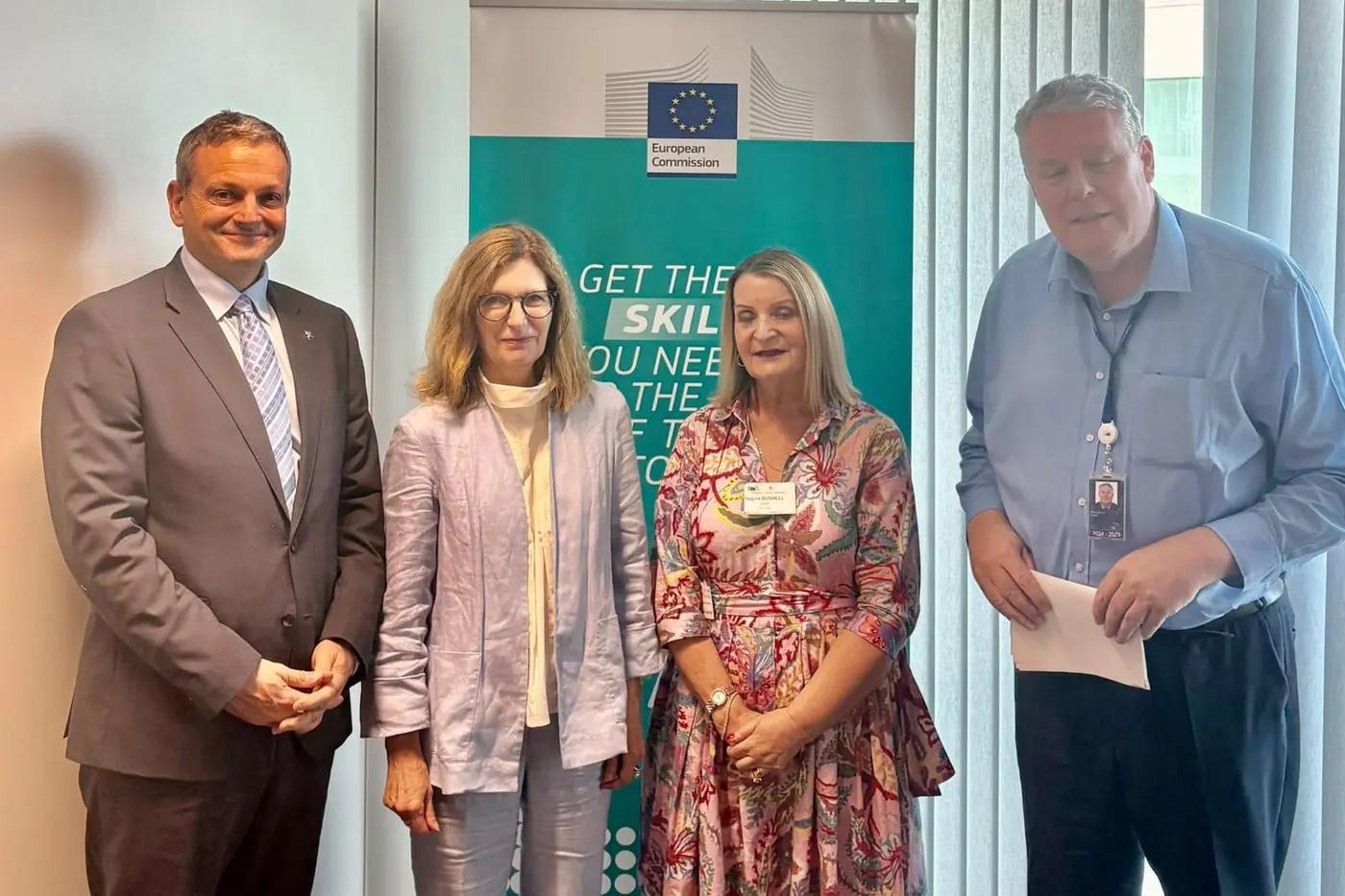
Athlone Chamber of Commerce brings Midlands business concerns to Brussels
Ciaran hosted an Athlone Chamber of Commerce delegation, led by President Regina Bushell and CEO Tommy Hogan, for meetings with Commission and Parliament officials on skills shortages, access to EU funding, cross-border trade barriers and recognition of qualifications.