EU–US tariff deal: “There is no upside for Ireland”
Ciaran condemned the EU–US tariff agreement, which he said exposes €1.9 billion of Irish agri-food and drinks exports to a 15% tariff, at an estimated annual cost of €285 million, with dairy losing €75m and prepared foods €60m.
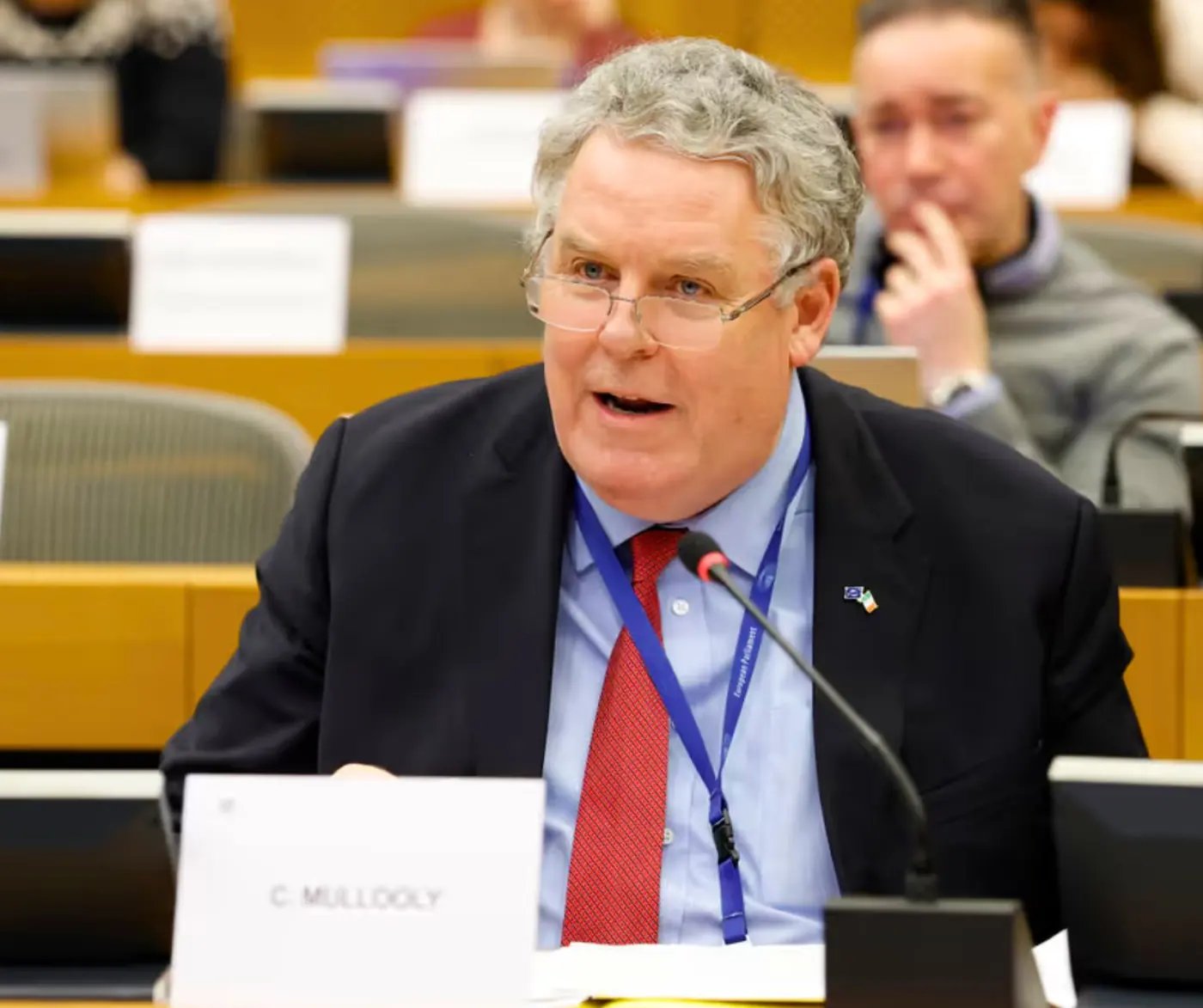
Ciaran condemned the trade agreement reached between the European Union and the United States, telling reporters that there was no upside in it for Ireland. Under the deal, a baseline tariff of fifteen per cent applies to European goods entering the American market, and he put the exposure for Irish agri-food and drinks at around €1.9 billion of exports, at an estimated cost of €285 million a year.
“By any stretch of the imagination, this is not a good deal for Ireland. It’s a damaging agreement for our exporters, and it appears EU leadership has simply capitulated to the US on this issue.”
He broke the figure down by sector. Dairy, he said, faces a loss in the region of €75 million and prepared consumer foods around €60 million, with beef and seafood also affected. “These are not theoretical numbers,” he said. “This is real money lost from Irish businesses, rural communities, and jobs.” He questioned how the Irish Government could describe the outcome as a good one: “I’m not sure how the Irish government could call this a good deal: it’s certainly not for Irish companies — now facing 15% tariff hikes.”
Ciaran also stressed that the agreement had not delivered the one thing exporters most needed, which was certainty. “We are still facing ongoing uncertainty,” he said. “The nightmare of instability continues for distillers.” Irish whiskey and spirits producers had spent months planning around the possibility of tariffs at various levels, and a headline deal that leaves the treatment of individual product categories unresolved does not allow a distillery to decide how much to lay down or how many people to employ. His response to the state of the sector was one word: “When will it end?”
Why trade is decided in Brussels
Trade policy is an exclusive competence of the European Union, which means the Commission negotiates on behalf of all twenty-seven member states and Ireland has no capacity to strike a separate bargain with Washington. That arrangement gives a small open economy the negotiating weight of the world’s largest single market, but it also means the outcome reflects the balance of European interests as a whole. Germany’s car industry, France’s agriculture and Ireland’s food, drink and pharmaceutical exports do not all want the same thing from the same negotiation.
Ireland is unusually exposed to the American market. The United States is one of the largest destinations for Irish dairy, particularly butter, for prepared consumer foods and for whiskey, and the businesses involved are often located in provincial towns where they are the main employer. A fifteen per cent tariff does not stop trade; it erodes margin and competitiveness against suppliers who do not face it. Ciaran said the Government and the European Union “must step up without delay”, arguing that support measures for affected exporters could not wait until the damage had worked through to employment.
Read moreWestmeath Examiner Agriland
Source: Westmeath Examiner, 28 July 2025.
SMEs make up 99% of businesses in the EU. EU rules on the Single Market, trade, State aid and transport shape their costs, and programmes such as LEADER, InvestEU and the agri-food promotion policy can help them grow.
Ciaran is shadow rapporteur on the EU’s agri-food promotion rules, working to widen access for small producers.
Related.
 Diliff, CC BY-SA 3.0, Wikimedia Commons
‘UK must ban Brazilian beef next’: Ciaran welcomes the EU–UK food and agriculture agreement
Ciaran welcomed the conclusion of negotiations on a new EU–UK agreement on food, agriculture, animals and plants, due to apply from 1 March 2028, and called for strong food-safety safeguards and no gaps for third-country imports.
 Wikimedia Commons
Ciaran tells ICOS: no change to animal transport rules, and they must take Ireland’s position into account
Ciaran, a full member of the AGRI Committee, met ICOS in the European Parliament for an update on the Commission’s proposed changes to EU animal transport rules. No changes have been agreed by Parliament’s Agriculture or Transport committees.
 Office of Ciaran Mullooly MEP
Commissioner Hansen agrees consumers need clearer food origin information, as Ciaran presses the case
At the Agriculture Committee, Ciaran asked how EU-funded promotion can make European origin clear while keeping Irish origin visible. Commissioner Christophe Hansen said European products “need to be visible” and that the gap Ciaran has raised is real.